








 Lena Neureuther

 Health & Nutrition
The Grape Cure - Powerful Detoxification
Grapes - the most powerful fruit of all! This chance to naturally regenerate your body should never be...
Pastry
SlicesChocolate shop
DiamondsFine Foods
Mylkies Creams Soft WhipsSelection
Bundles Gift voucherLiterature
E-books All products Almond Tarte Slice
from 3,20 €
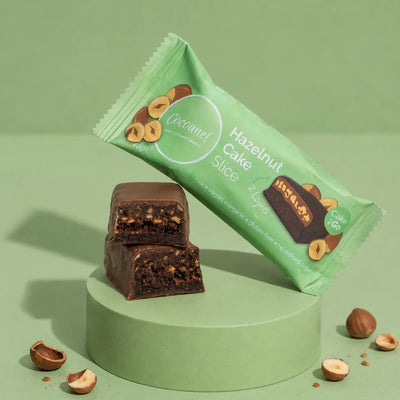 Hazelnut Cake Slice
from 3,20 €
 Coconut Cream Slice
from 3,20 €
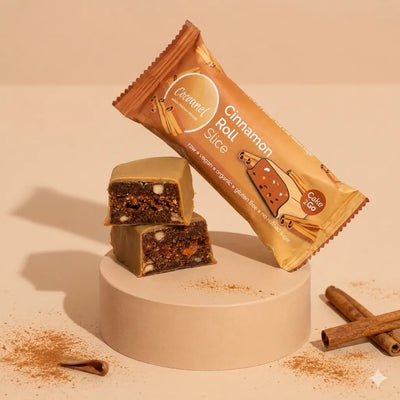 Cinnamon Roll Slice
from 3,20 €
View all
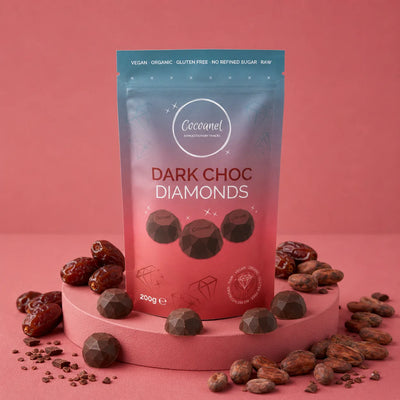 Dark Choc Diamonds
from 14,95 €
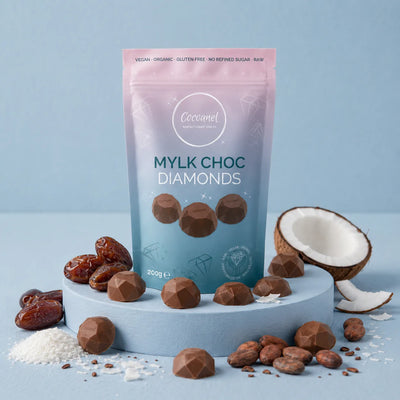 Mylk Choc Diamonds
from 14,95 €
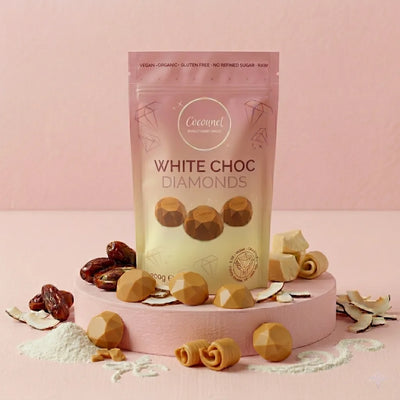 White Choc Diamonds
from 14,95 €
 Pink Choc Diamonds
from 14,95 €
View all
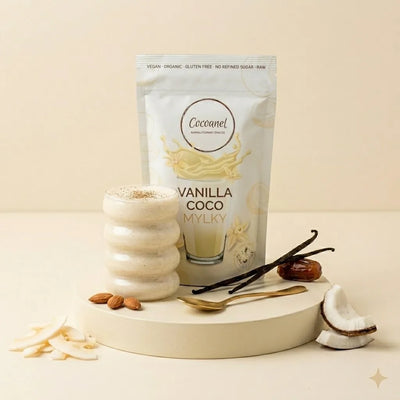 Vanilla Coco Mylky
from 14,00 €
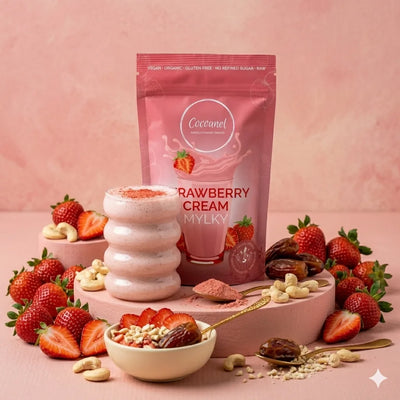 Strawberry Cream Mylky
from 14,00 €
 Hemp Choc Mylky
from 14,00 €
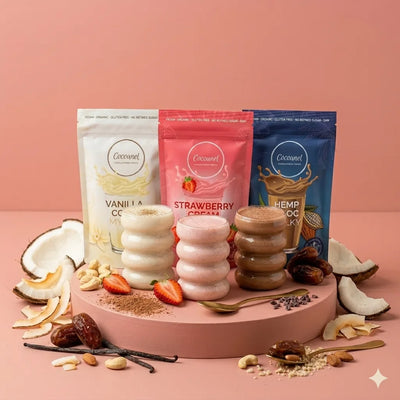 Mylky Bundle
from 39,00 €
View all
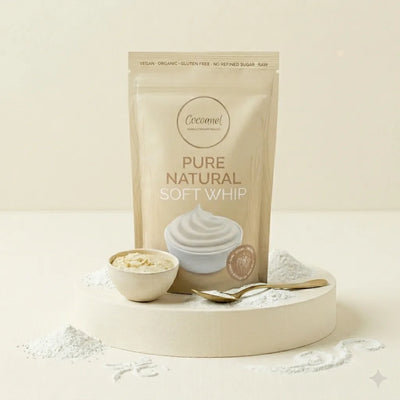 Pure Natural Soft Whip
from 19,95 €
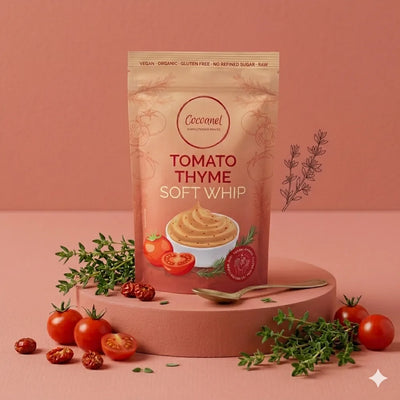 Tomato Thyme Soft Whip
from 19,95 €
 Herbal Onion Soft Whip
from 19,95 €
 Soft Whips Mixed Bundle
from 56,00 €
View all

It is so incredibly exhausting to be asked over and over again as a vegan, “Where do you actually get your protein from?” “From everything I damn well eat”!!!! Who doesn’t know this? As soon as you mention somewhere that you eat vegan or even raw vegan, that is the first question you hear! This topic is soooooo overplayed, and yet there are still people who believe that you cannot live without animal protein. Seriously?
So now I will once again explain step by step why (animal) protein, and especially too much of it, is extremely harmful to the human organism, why plant-based amino acids are the best source of protein, and I will also address general protein requirements, which are by far not where most people suspect them to be!
The dairy, egg, and meat industries have done an excellent job of planting all sorts of misconceptions in our heads. A dogma has been created that will not disappear from people’s minds anytime soon, an infiltration that has been passed down from generation to generation for years and will continue to be. Until now, only a small number of people have managed to break free from these false, even physically harmful misconceptions and embark on a simple yet powerful alternative path!
Healthy people who eat plant-based foods bring little to the pharmaceutical and meat industries, if anything… it is the chronically and severely ill who bring the money. The individual does not matter, nor does it play any role that humanity is living increasingly unhealthily and becoming increasingly ill, as long as the money keeps flowing.
Anyone who has understood this principle may also have more courage to question things and listen to counterarguments, which often opens the door to a new life.
To make everything completely understandable, I will proceed as follows in this article:
Proteins are molecular chains made up of amino acids. Depending on the number of amino acids, they are called peptides (one amino acid), oligopeptides (up to 10 amino acids), or polypeptides (from 10 amino acids). The term protein is only used for chains of 50–1000 amino acids. Proteins are not only the basic building blocks of all enzymes and cells; they are the basis for protein biosynthesis and all body tissue. Simply put, protein structures hold the entire body together.
A distinction is made between essential and non-essential amino acids. The essential ones, as the name suggests, are essential and must therefore be supplied through food.
These include:
Histidine, isoleucine, leucine, lysine, methionine, phenylalanine, threonine, tryptophan, and valine.
Our organism synthesizes the remaining amino acids, such as glutamic acid, itself from the nutrients and essential amino acids it receives.
Without protein, no process (protein biosynthesis, metabolism, cell renewal, digestion…) would be possible in the body. It is therefore important that proteins are present, although even the smallest amounts are sufficient to enable all vital processes in the body.

The German Nutrition Society recommends 0.8 g of protein per kg of body weight, but this already includes a generous safety margin. What many do not know is that too much protein harms the body; it strains the kidneys and creates an acidic environment in the body. There are studies and research that have concluded that no more than 10% of daily calories should come from protein (the same applies to fat). Furthermore, there is evidence that in the countries where the least protein is consumed through food, the fewest cases of illness and death are recorded. The oldest people are those with the lowest protein content in their diet (e.g., in Asian countries). Among people living vegan or raw vegan, the proportion of protein in the diet usually does not fall below 10%, as that is the natural content of all plant foods, thus naturally providing enough, but not too much, protein. In the long term, optimal protein intake leads to stable health and a long life. (See also The China Study)
Proteins are proteins, regardless of their origin!! No, not really, because there are indeed major differences between plant and animal protein. All the essential amino acids that humans need are found in plants (all plants contain all essential amino acids). There is no need to consume animal protein to meet your protein requirements, which anyway comes with many negative side effects.
A comparison:
The World Health Organization (WHO) recommends that 5% of daily total calorie intake should come from proteins.
Percentage of calories coming from protein:
In summary, this means: Animal products do provide proteins, but these amino acids always come in combination with acid, which over-acidifies our body and depletes it of important nutrients (including calcium). Furthermore, the body cannot do anything with whole proteins; it must first break them down into individual amino acids to make use of them. This process requires a lot of energy, which ultimately leaves us with none, making us feel drained and tired. If you turn to purely plant-based protein sources or individual amino acids, these unwanted side effects are avoided, and the body is easily supplied with everything it needs. Furthermore, plant protein (amino acids) is much easier to digest because it comes with fiber, which in turn speeds up/eases digestion.
Furthermore, animal protein is usually only edible after it has been heated. However, when heated above 42°C, the protein denatures (comparable to a fever: fatal above 42°C). This means that the proteins take on a so-called “cross-linked” structure. The body cannot do anything with these proteins in this structure; they are merely waste products, are attacked by white blood cells as foreign bodies, and must be transported away by the liver and kidneys with great effort. In contrast, with plant protein consumed from unheated fruits and vegetables, everything can be optimally absorbed; this is much more efficient, and ultimately you do not need to consume that much to meet your protein requirements.
The required protein content is significantly overestimated; the recommended amount of 0.8 g/kg of body weight is already set very high, and in reality, the average American consumes 6–10 times more protein than they need. However, it is in heated and therefore unusable form, which ultimately means that they actually absorb much less than they think. Too much protein overloads the kidneys and liver, enlarges and damages them. Furthermore, excessive protein consumption causes the kidneys to draw large amounts of calcium from the body, which in turn can lead to weak bone density and kidney stones.
Scientists have discovered that animal protein is particularly harmful to the body because many animal amino acids contain a substance called “sulfa.” This substance is classified as highly toxic and thus puts the body in a toxic state.
A diet with an adequate amount of plant amino acids is therefore the best solution to keep the body healthy in every respect.
What should you consume then, besides small amounts of plant protein? Fat is also not recommended, so the solution is obvious. CARBOHYDRATES!
Carbohydrates are the first choice when it comes to the optimal energy source for the human organism. But since this article is about proteins, I have written an extra article about carbohydrates, which you can find here.
The answer is: ALL OF THEM!
Fruits, leafy greens, spinach, sprouts, nuts, seeds, algae… and many more are particularly rich in plant amino acids, which are completely available to our body and cannot be absorbed like animal protein!
All plants contain amino acids, so as vegans, we have the least to worry about regarding sufficient protein intake. In fact, no one needs to worry about sufficient protein intake; protein deficiency only occurs in third-world countries when people are truly starving and cannot even come close to meeting their calorie requirements, and then the problem is not a lack of protein intake, but generally insufficient calorie intake. We here in the West are the last ones who need to worry about our protein supply, and yet we are the only ones who do exactly that and deal with this topic almost fanatically. In any case, it is a topic you can work on—simply trust the power of plants, and the micro- and macronutrient supply will take care of itself—provided that sufficient unheated plant food is consumed.
I hope this article was helpful, or confirming enough, to understand that the consumption of animal protein is no longer acceptable, and is even harmful to health.
Feel free to let me know your experiences with protein and leave a comment if you have any further questions about this topic.
Lena
Sources: “Forks over Knifes”, www.drmcdougall.com
“The China Study”

About the author
Dancer, nutrition trainer (B & A licence) and founder of Cocoanel. She writes about raw vegan food, sport and enjoyment without going without.
Nourished by Cocoanel
Knowledge, exchange and inspiration around the raw, natural lifestyle every week.

Read more
Health & NutritionGrapes - the most powerful fruit of all! This chance to naturally regenerate your body should never be...
 Health & Nutrition
The number one cause of death in Western countries: Far too little fruit consumption! Those who abstain from...
 Health & Nutrition
Fruit and fructose can never lead to fatty liver - here is the truth about fatty liver!
 Health & Nutrition
Carotenoid Warning: Why Persimmons Are Not Always Harmless.
 Health & Nutrition
Myths about raw food—unfortunately, there are quite a few. To avoid confusion and truly understand what is healthy...
 Health & Nutrition
Raw food vs. cooked food - what you need to know! Very important and crucial for your health.
Newsletter
Plus Lena’s 14-day e-book for changing your diet, with a meal plan. You’ll be the first to get new recipes and offers.