





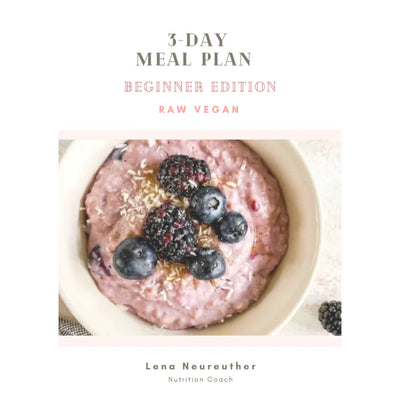


 Health & Nutrition
The Grape Cure - Powerful Detoxification
Grapes - the most powerful fruit of all! This chance to naturally regenerate your body should never be...
Pastry
SlicesChocolate shop
DiamondsFine Foods
Mylkies Creams Soft WhipsSelection
Bundles Gift voucherLiterature
E-books All products Almond Tarte Slice
from 3,20 €
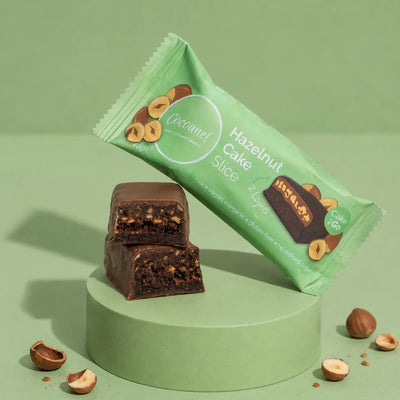 Hazelnut Cake Slice
from 3,20 €
 Coconut Cream Slice
from 3,20 €
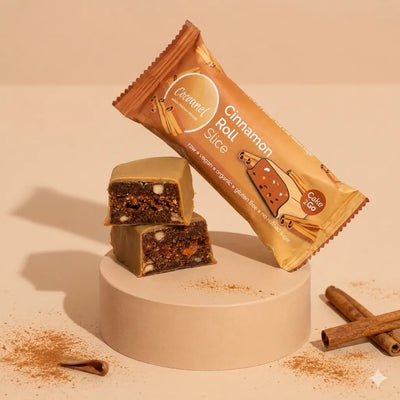 Cinnamon Roll Slice
from 3,20 €
View all
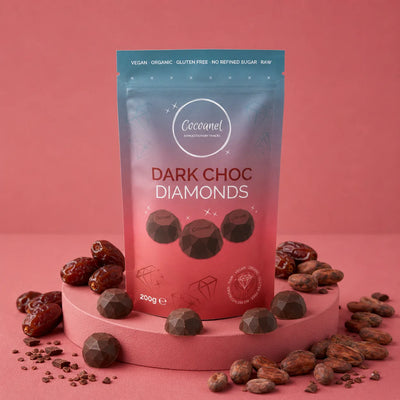 Dark Choc Diamonds
from 14,95 €
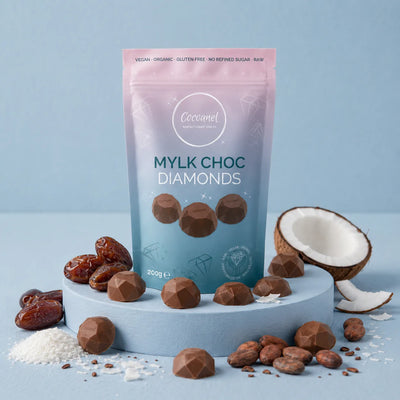 Mylk Choc Diamonds
from 14,95 €
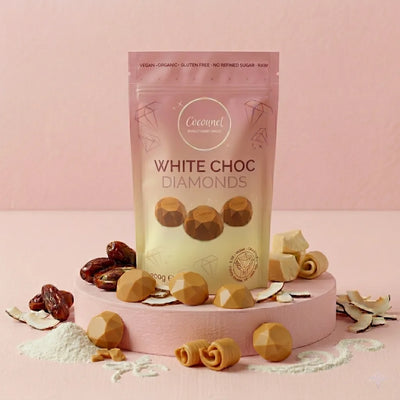 White Choc Diamonds
from 14,95 €
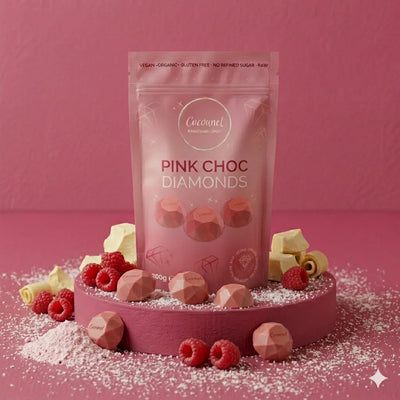 Pink Choc Diamonds
from 14,95 €
View all
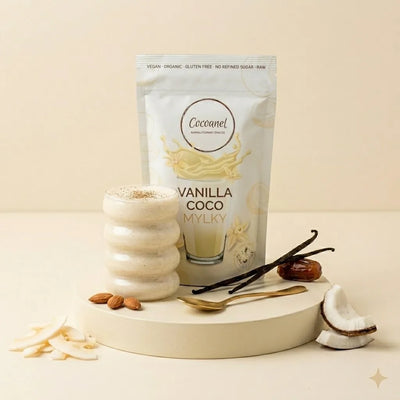 Vanilla Coco Mylky
from 14,00 €
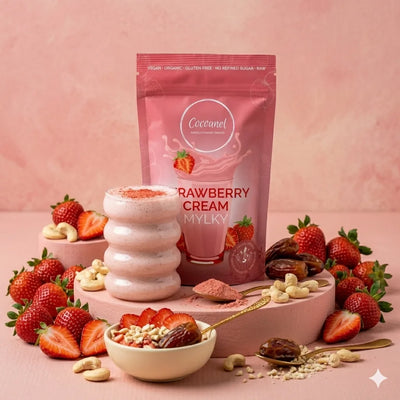 Strawberry Cream Mylky
from 14,00 €
 Hemp Choc Mylky
from 14,00 €
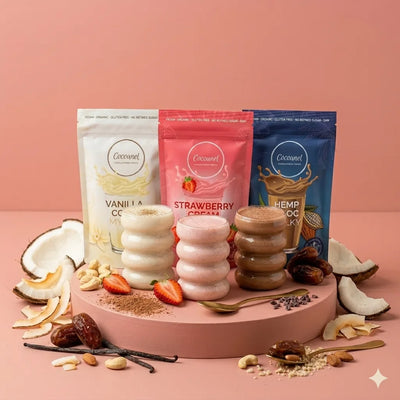 Mylky Bundle
from 39,00 €
View all
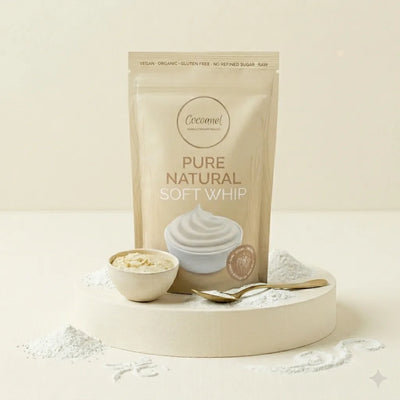 Pure Natural Soft Whip
from 19,95 €
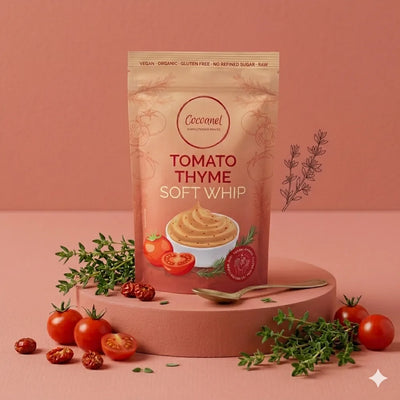 Tomato Thyme Soft Whip
from 19,95 €
 Herbal Onion Soft Whip
from 19,95 €
 Soft Whips Mixed Bundle
from 56,00 €
View all
 Lena Neureuther

Potatoes!
the Germans' favorite tuber, whether as boiled potatoes, potato gratin, potato dumplings, fries, baked potatoes, potato bread, fried potatoes, potato salad, potato soup, or as an ingredient in raclette or casseroles, the potato is probably one of the most versatile foods, affordable, filling, and naturally vegan. This actually makes it a superfood in a vegan diet. Nevertheless, there is a major disadvantage, because potatoes cannot be eaten raw. Foods that are inedible in their raw, natural form are actually not intended by nature for us humans. The potato has also gained a bad reputation, especially among low-carb followers. It is considered a fat-maker because it has a very high carbohydrate content. But carbohydrates are essential for good health! However, they must be the right carbohydrates. Starchy foods such as rice, grains, and potatoes are not among the carbohydrates that should be the No. 1 filler for humans.
Whether potatoes fit into your own diet, however, is something everyone must decide for themselves.
If you follow a low-carb diet (which permanently leads to health problems), you will probably avoid them anyway, but if HCLF is the diet you have chosen, potatoes, properly prepared and in the right amount, will be gladly enjoyed. As a raw food advocate, however, I do not support the consumption of potatoes, because as already mentioned, they are not edible raw and heating them above 42°C simply destroys all nutrients!
Alleged benefits of potatoes:
-They are low in calories, with only 77 kcal/100g, making them a popular "weight loss food"
-They contain no fat – another reason why they fit perfectly into an HCLF diet.
-They contain 2% protein, and the amino acids are in a composition that is perfect for the human body (which is not necessary at all, because there is an amino acid pool in the body that stores amino acids, i.e., we do not need to consume every essential amino acid daily). The human organism cannot utilize animal protein as well as plant protein. Protein of animal origin acts acidic in the body, while plant protein is alkaline! Nevertheless, the potato must be heated before consumption (except sweet potatoes!), which destroys (denatures) all protein. The body can no longer do anything with this denatured protein, it cannot utilize it, and the liver and kidneys have to work hard to excrete it. Therefore, it is questionable whether the protein content in the potato can be seen as an advantage. Personally, I prefer to get my amino acids (from which the body itself forms protein) from raw foods (green leafy vegetables, vegetables, fruit, seeds, nuts), to ensure that the proteins are still intact and not denatured.
-They have a high potassium content, higher than that in bananas. Since potassium is important for all cells in the body – and essential for the muscles and nervous system, potatoes would actually be a great fitness food and could help you recover faster after training. However, heating again poses a major problem, because it destroys minerals such as potassium, so you can no longer make use of the potassium from the potato. That is why I personally turn to raw fruits (bananas, dates...) to meet my potassium requirements.
-They contain a lot of vitamin B6 and vitamin C, which is of great importance for energy metabolism and the immune system. But again, you must understand that these vitamins are destroyed by heating.
-They are a good source of iron, which is why they are also recommended especially for women during their period. But here too, I prefer raw sources of iron, such as spinach, lamb's lettuce, red cabbage, etc., because iron also does not withstand the heating process!
Disadvantages of potatoes:
-They belong to the nightshade family, which is often associated with various diseases such as multiple sclerosis (Dr. Cordain's theory).
-They contain saponins, which serve the tubers as a kind of pesticide that is supposed to keep pests away from the plant. Because saponins are highly toxic in high doses (also for humans). These saponins cannot be destroyed by cooking either, but since most saponins are located under the skin, if potatoes are peeled before consumption, most of the toxins are removed.
-They contain lectins (proteins), which have the potential to damage the intestinal walls. Lectins can, however, be destroyed by heating, as they denature at 75°C. Cooking at 121°C can destroy all lectins, and fermentation can destroy 95% of all lectins. But not just lectins!!
The right preparation:
-Potatoes should always be peeled, if possible, so that most of the saponins are removed.
-Prepare without salt and fat (see the Oil! post)
-Let cool for at least 15 min. before consumption, because the starch in the potatoes changes during cooling so that it is better digested by the body and can no longer be converted into fat.
Conclusion:
-Anyone who opts for a low-carb diet will probably avoid potatoes anyway, and due to the lectins, the tuber should only be enjoyed in moderation in case of intestinal problems. However, sweet potatoes are a good alternative, they do not belong to the nightshade family, contain no lectins, and are edible raw, which means that all nutrients, vitamins, etc. remain intact when eaten raw, unlike potatoes.
Due to the need to heat the potato before consumption, I personally cannot recommend consuming the tuber. Even if it would bring many benefits in theory, these ultimately bring nothing to our body, because they are destroyed by heating and are therefore not accessible/utilizable.
Anyone who still does not want to do without the tuber should be aware that it is purely a flavoring ingredient, or an empty calorie source, and that all essential nutrients must be covered additionally by raw foods. Only through raw food can humans stay healthy and get all the nutrients they need.

Recipe tip at the end for everyone who still does not want to cut potatoes out of their diet.
For 4-6 servings
Preparation time: 10 minutes
Baking time: 20 minutes
Total time: 30 minutes

About the author
Dancer, nutrition trainer (B & A licence) and founder of Cocoanel. She writes about raw vegan food, sport and enjoyment without going without.
Nourished by Cocoanel
Knowledge, exchange and inspiration around the raw, natural lifestyle every week.
Read more
Health & NutritionGrapes - the most powerful fruit of all! This chance to naturally regenerate your body should never be...
 Health & Nutrition
The number one cause of death in Western countries: Far too little fruit consumption! Those who abstain from...
 Health & Nutrition
Fruit and fructose can never lead to fatty liver - here is the truth about fatty liver!
 Health & Nutrition
Carotenoid Warning: Why Persimmons Are Not Always Harmless.
 Health & Nutrition
Myths about raw food—unfortunately, there are quite a few. To avoid confusion and truly understand what is healthy...
 Health & Nutrition
Raw food vs. cooked food - what you need to know! Very important and crucial for your health.
Newsletter
Plus Lena’s 14-day e-book for changing your diet, with a meal plan. You’ll be the first to get new recipes and offers.